


Produktbeskrivning:
Mikrofiber flätat snöre
Pris: Swing Back Valve-priset förändras på grund av specifikationer, materialkostnad och växelkurs. Vänligen ge mig dina kontaktuppgifter, jag kommer att uppdatera det senaste priset till dig

Hur fungerar en backventil?
Spricktryck
A Swing Check Valve requires a minimum upstream pressure (pressure differential between inlet and outlet) to open the valve and allow flow through it. This minimum upstream pressure at which the valve opening occurs is called the check valve 'cracking pressure'. The specific cracking pressure changes based on the valve design and size, so ensure that your system can generate this cracking pressure and that it is suitable for the application.
Stängning
Om uppströmstrycket någonsin faller under spricktrycket eller om det finns ett mottryck (flöde som försöker röra sig från utloppet till inloppet), kommer ventilen att stängas. Beroende på backventilens design kan stängningsmekanismen ändras. Kort sagt, mottrycket trycker en grind, kula, membran eller skiva mot öppningen och tätar den. Beroende på designen kan stängningsprocessen assisteras av en fjäder eller gravitation.
Installationsorientering
Eftersom en envägsventil bara fungerar i en riktning, är det avgörande att känna till den korrekta installationsriktningen. Ofta finns det en pil på ventilhuset för att signalera flödesriktningen. Annars måste du undersöka ventilen för att säkerställa att den är installerad i den avsedda flödesriktningen. Om det är bakåtriktat kommer inte flödet att kunna röra sig genom systemet och en uppbyggnad av tryck- kan orsaka skada.
Backventiltyper
Beroende på utformningen av backventilen kommer de att fungera något annorlunda. Den vanligaste backventilen är en fjäderbelastad-backventil, men vi kommer att diskutera flera typer nedan.
Fjäderbelastad i-linje
In-line spring loaded Swing Check Valve are common, easy to understand, and have a simple design. Figure 1 shows an example of a spring loaded in-line check valve and Figure 2 shows the main components with arrows showing flow direction. When flow enters the input port of the valve, it has to have enough pressure (force) to overcome the cracking pressure and the spring force. Once overcome, it pushes the disc, opening the orifice and allowing flow to move through the valve. When the input pressure is no longer high enough, or there is a backpressure, then the backpressure and spring push the disc against the orifice and seal the valve shut. The spring, along with the short travel distance for the disc, allows for quick reaction time for closing. This valve design also prevents against pressure surges in the line, and therefore, also prevents a water hammer from occurring. Common types of spring loaded in-line check valves are also called 'nozzle check valves' or 'silent check valves.' They can be installed in a vertical or horizontal orientation. However, since they are in-line to the system, they have to be fully removed from the line to be inspected and/or perform maintenance.

Fjäderbelastad Y
Spring loaded y-check valves operate very similar to in-line spring loaded check valves. The difference, as you can see in Figure 3, is that the spring and movable disc are positioned at an angle. This creates a 'y' shape, hence the name of the valve. It works the exact same as an in-line valve, but since the moveable components are at an angle it can be inspected and serviced while it is still connected to the system. However, they are larger and take up more room within the system.

Boll
A ball check valve uses a free-floating or spring-loaded ball that rests on the sealing seat to close the orifice. The sealing seat is normally conically tapered in order to guide the ball into the seat and create a positive seal, thereby, stopping reverse flow. When the pressure of the fluid in the inlet side exceeds the cracking pressure, the ball is dislodged from its seat and allows flow to occur. When the inlet pressure doesn't exceed the cracking pressure, or there is back pressure, the ball will close with the back pressure or via the spring, effectively closing the orifice.
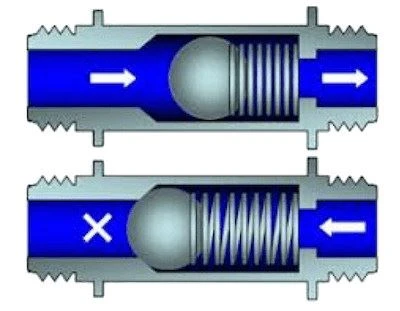
Figur 4: Fjäderbelastad kulbackventil med inloppsporten till vänster och utloppsporten till höger.
Diafragman
Diaphragm check valves consist of a rubber diaphragm that flexes open when the inlet pressure is increased. Normally, these types of valves have a free-floating self-centering diaphragm, which makes them normally open (NO). These means that there is no "cracking pressure", however, they can be normally closed (NC) and then it requires an inlet pressure to overcome the diaphragms elasticity. Figure 5 on the left shows a normally open diaphragm check valve as there is 'minimal' inlet pressure and the media still gets through. As inlet pressure increases, the diaphragm will flex open more allowing flow through, as seen in Figure 5 in the middle. If backpressure occurs (or it is a normally closed diaphragm check valve) the diaphragm will be forced against the opening and seal it to prevent any backflow, as seen in Figure 5 on the right. Due to the normally open nature, diaphragm check valves are ideal for low-pressure or vacuum applications.

Hiss
En backventil för lyft består av en styrd skiva som höjs (lyfts) upp från ventilsätet för att tillåta mediaflöde. Det krävs ett spricktryck för att övervinna tyngdkraften och/eller en fjäder och styrningen håller skivan i en vertikal linje, så att skivan kan åter-sättas på plats med rätt inriktning och tätning. Det vanligaste är att lyftbackventiler kräver att mediet gör en 90-graderssväng, som ses i figur 6, men det finns backventiler för lyft som är i linje eller i vinkel. När inloppstrycket sjunker under spricktrycket eller det finns ett mottryck, kommer ventilen att stängas av gravitation, fjäder och/eller genom att använda mottrycket. Om det inte finns någon fjäder som hjälper till att stänga, är monteringsorienteringen med hänsyn till tyngdkraften viktig för att säkerställa att skivan stängs med tyngdkraften.

Gunga
Swing check valves are also commonly referred to as 'tilting-disc' check valves. They consist of a disc that is on a hinge (or trunnion) that swings open with an inlet pressure. As inlet pressure decreases or there is a backflow, the disc will swing shut. If there is no spring to assist in closing, mounting orientation in regard to gravity is important to ensure that the disc will swing shut with gravity. Figure 7 shows an example of a swing check valve.

Sluta
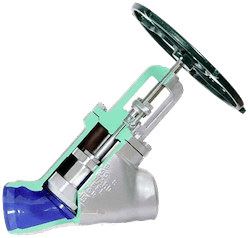
En stoppventil är vanligtvis en fjäderbelastad y-backventil eller en backventil för lyft, men den har en manuell överstyrningsfunktion. Detta gör att de kan fungera som en normal backventil och förhindra återflöde, men det finns en extern mekanism som kan användas för att åsidosätta den och hålla ventilen i öppet eller stängt tillstånd. Därför kan denna ventil fungera som två ventiler i en. De används ofta i kraftverk, panncirkulation, ånggeneratorer, turbinkylning, säkerhetssystem.
Fjäril eller Wafer
Fjärilsbackventiler och en waferbackventiler kan användas omväxlande. De består av en fjärilsskiva, eller wafer, stil på ett gångjärn och en fjäder. När inloppstrycket övervinner spricktrycket öppnas de två sidorna, som ses i figur 9. När inloppstrycket minskar eller det finns ett tillbakaflöde, kommer fjädern på gångjärnet (eller mottrycket) att stänga skivan och effektivt täta den. Denna ventiltyp tillåter ett rakt mediaflöde med minimalt hinder.

Backventiler för vatten
Backventiler används i många vattenapplikationer, som dricksvatten- och avloppsvattenapplikationer, och kallas helt enkelt envägsvattenventiler. För dricksvattenapplikationer säkerställer de att inga medier från omgivningen (ventilens utloppssida) kan komma in i systemet med det säkra rena dricksvattnet och förorena det. För avloppsvattenapplikationer säkerställer de att avloppsvattnet inte kan åter-träda in i systemet och orsaka översvämning eller ytterligare förorening. För vattenpumpningsapplikationer används ofta en fotventil för att säkerställa att inget skräp kommer in i ledningen och för att hålla det interna trycket för att fylla på. Anknäpsventiler kan även användas för utsläpp på vattenledningar. Sumppumpens backventiler ser till att det utsläppta vattnet inte kommer tillbaka in i sumppumpen med gravitation när pumpen stängs av.
Pneumatisk backventil
En pneumatisk backventil, eller luftbackventil, tillåter luftflödet in och hindrar den från att gå ut. De kallas ofta helt enkelt bara envägsluftventiler. Den vanligaste applikationen är för en luftkompressor. De tillåter kompressorn att hålla vissa delar trycksatta och andra delar av-tryck. De kan placeras på en kolvkompressor (inlopp och utlopp), luftbehållare, utloppsrör, etc.
Vanliga frågor
Vad är backventilsymbolen?
The check valve symbol can be seen in Figure 13. It points in the orientation that it allows the flow with a vertical line showing it doesn't allow backflow.

Figur 13: Backventilsymbol
Vad är syftet med en backventil?
Huvudsyftet med en backventil i ett system är att förhindra återflöde, vilket kan skada utrustning eller förorena media uppströms.
Vilka är vanliga backventilproblem?
Common check valve problems are: noise, water hammer, vibration, reverse flow, sticking, leakage, and component wear/damage. To prevent issues, it is crucial that a check valve is specified correctly for the application and media. The two most common issues due to improper specification are reverse flow and water hammer. For both issues, a fast-closing check valve should be used. Reverse flow can occur if the check valve doesn't close fast enough and water hammer can occur if pressure surges occur causing shock waves within the media.
Kommer en backventil att stoppa vattenslag?
En backventil kan förhindra en vattenhammare om den är snabbverkande. Detta förhindrar tryckstötar, vilket skapar chockvågor i hela media. Dessa stötvågor kan skada utrustning, rörstöd och till och med bryta rörledningar på grund av vibration.
Vilken riktning ska en backventil installeras?
Backventiler måste installeras i enlighet med deras inlopp och utlopp, vilket ofta visas som en pil på ventilhuset. Eftersom de bara tillåter flöde i en riktning, kommer de inte att fungera korrekt om de installeras baklänges. När det gäller horisontell eller vertikal, beror det på din ventildesigntyp. Om den har en fjäder är vilken orientering som helst okej. Om det inte finns någon fjäder kan tyngdkraften påverka backventilens funktion, så att se till att du känner till de inre komponenterna kommer att säkerställa att du installerar den korrekt på ett horisontellt eller vertikalt sätt.
Varför fungerar inte min backventil?
When a check valve doesn't work, it allows backflow. Three possible reasons for this are: sticking, leakage, or slow closing. If there isn't a filter in the line, dirt or debris can be trapped between the disc and body keeping it open. Due to wear or corroding media on the material, the disc or seat can become damaged or torn preventing a proper seal and allowing backflow. If the valve closes too slow, minimal backflow can enter before a proper seal can occur. Ensure that gravity is helping the design, and/or your spring is quick enough to close the valve rapidly.
Populära Taggar: gunga kontrollera ventil


